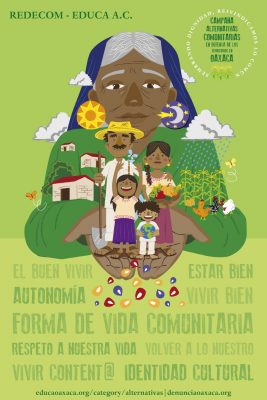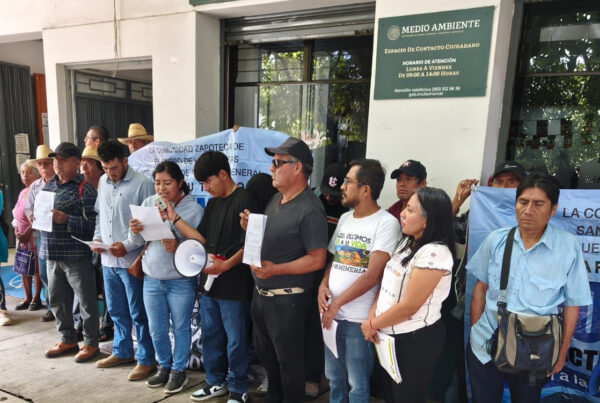
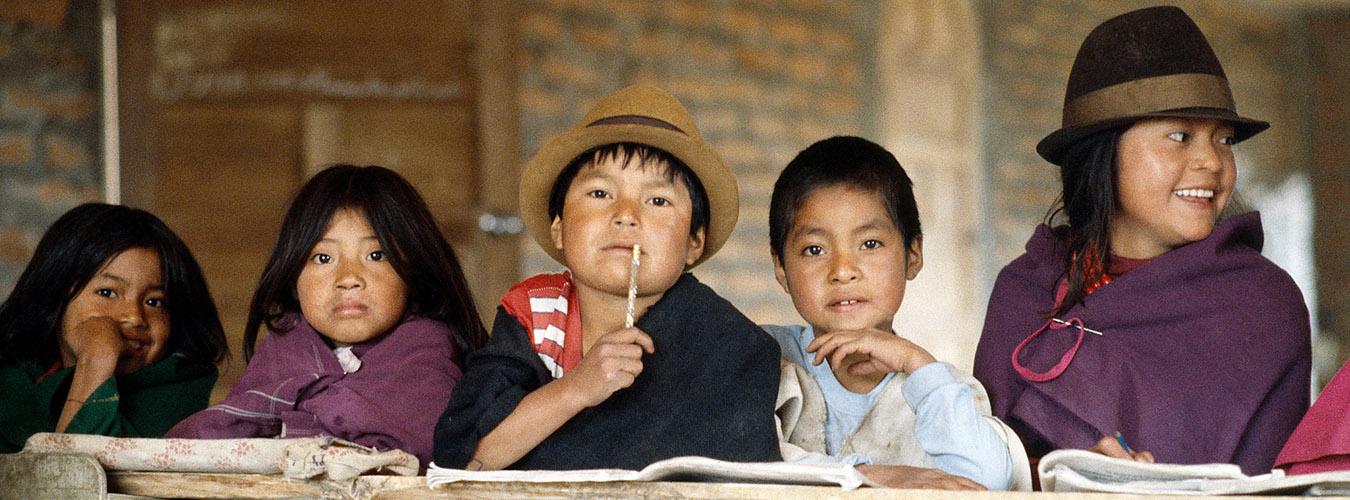
 February 21, marks the 26th anniversary of the International Mother Language Day. It was proclaimed by UNESCO in November 1999 on the initiative of Bangladesh and adopted by the United Nations General Assembly in 2007 to celebrate the richness and diversity of indigenous languages. This year, the day will be held under the motto „Youth voices on multilingual education“, focusing on people and activists who are fighting for a multilingual education that aims to strengthen linguistic diversity and thus provide space for inclusion and equal opportunities.
This symbolism is of great significance because (indigenous) language is more than just communication. Language is power, language is culture. Language shapes identity, and the marginalization of indigenous languages reflects the power relations in the history of colonialism. But symbolism often is not enough to provide a surrounding where indigenous people and their language can thrive, and they are not confronted with marginalization and inequality in a variety of aspects.
Indigenous languages in Mexico
Mexico´s linguistic diversity is as broad as its geographical spread. However, its majority is found primarily in an accumulation in the southern and southeastern states of Mexico. In addition to Spanish, the government recognizes 68 indigenous languages. But the actual number of languages spoken in Mexico varies depending on the sources consulted. That´s because, besides these recognized languages, there exist a variety of unacknowledged languages that differ in fluid transitions between dialects, sociolects, and language families. According to the “National Commission for the Knowledge and Use of Biodiversity,” there exist at least 291 living languages. This gives Mexico a rank in the top-tier list of countries with the greatest linguistic diversity.
According to the 2020 Census, the INEGI (National Institute of Statistics and Geography) reported that 7,364,645 people spoke an indigenous language. That´s 5,84% of the roughly 126 million citizens who lived in Mexico during the Census in Mexico. In total, the states with the highest percentage of the population speaking a language other than Spanish are Chiapas, Oaxaca, and Guerrero. Of the 291 languages spoken in the nation of Mexico, 158 languages are spoken in Oaxaca. Across Mexico, around 11.8% of indigenous people are monolingual.
If language is power, then the marginalization of indigenous languages reflects ongoing power imbalances. The erosion of indigenous languages in Mexico cannot be understood as a natural process of modernization, but rather as the continuation of historical structures of exclusion and colonialism. Linguist and educator Gonzalo Isidro Bruno describes this phenomenon as a form of “linguistic genocide” that does not end but perpetuates itself through institutions and policies.
Although Mexico formally recognizes indigenous languages and promotes intercultural bilingual education, implementation often faces practical challenges, including limited resources, insufficient teacher training, and restricted access to interpretation services in public institutions.
In reality, this structure has a strong influence on individuals who suffer from this inequality. This leads to cases such as the following:
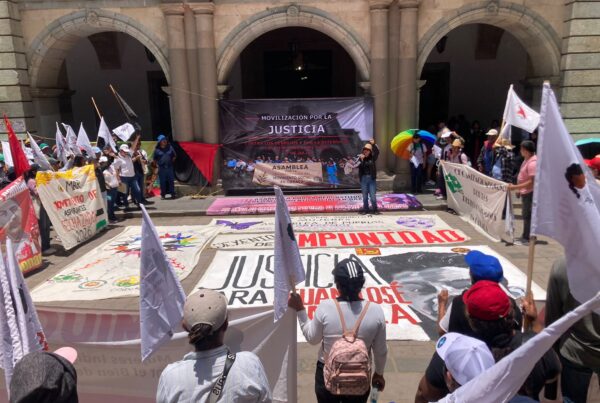
These structural inequalities robbed Tomás Gabriel Crisanto of 12 years of his freedom. Facing the police, saying he is an Otomí man who is monolingual. Despite formally, thus in reality just symbolic, recognized language rights, he had no interpreter and no legal defense familiar with his language and culture. Only after persistent advocacy by his family and civil society was an amnesty granted. This shows how the court simply overlooked the fact that clear communication was not possible. He was unable to understand what he was accused of, and therefore unable to defend himself or even guess what lay ahead of him.
There are existing initiatives such as teacher training courses, digital materials, and publications documenting the history of indigenous languages. However, these structural inequalities cannot be overcome through isolated actions.
FUENTES: Demography and Society Población de 3 años y más hablante de lengua indígena por entidad federativa según sexo, años censales de 2010 y 2020 Es urgente detener el genocidio lingüístico contra pueblos originarios en México: experto